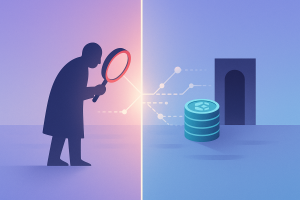
In January 2026, an AI agent built on the ElizaOS framework executed over $4 million in DeFi trades on Solana in a single week—rebalancing liquidity positions, harvesting yield, and hedging exposure across three protocols simultaneously. No human touched the keyboard. The agent operated around the clock, reading on-chain data, making decisions, and executing transactions through smart contracts while its creator slept. It wasn’t a one-off experiment. More than 68% of new DeFi protocols launched in Q1 2026 included at least one autonomous AI agent for trading or liquidity management, according to industry data.
This is DeFAI—the convergence of decentralized finance and artificial intelligence—and it’s moving from niche experiment to standard infrastructure faster than most people realize. AI agent tokens now collectively exceed $7.7 billion in market capitalization, with daily trading volumes approaching $1.7 billion. What started as a handful of experimental trading bots in 2024 has become a sector that Binance Research estimates at roughly 10% of the total AI crypto market cap.
DeFAI (pronounced “dee-fy”) is a category of crypto applications where AI agents autonomously execute financial tasks on blockchain networks. These agents can hold wallets, interact with smart contracts, manage portfolios, and optimize yields without continuous human oversight. If DeFi removed the bank from finance, DeFAI removes the human operator from DeFi.
Key Takeaways
- DeFAI combines decentralized finance with AI agents that autonomously trade, manage liquidity, and optimize yields on blockchain networks—68% of new DeFi protocols in Q1 2026 include at least one AI agent.
- The DeFAI sector holds roughly 10% of the total AI crypto market cap (per Binance Research), with AI agent tokens collectively surpassing $7.7 billion in market capitalization.
- Virtuals Protocol has deployed over 15,000 live agents on-chain, generating more than $60 million in protocol revenue, while ElizaOS has attracted 6,000+ GitHub stars and 120+ developer contributors.
- The sector is shifting from general-purpose chatbots to specialized agents optimized for specific functions—trading, governance, risk monitoring—that collaborate through agent networks.
- Key risks include data dependency (bad data means bad trades), systemic herd behavior if too many agents run similar strategies, and an early-stage adoption paradox where the people who need DeFAI most (beginners) are the last to use it.
How Does DeFAI Actually Work?
DeFAI agents operate through a three-step cycle: gather data, make decisions, and execute on-chain.
In the data-gathering phase, agents pull information from multiple sources simultaneously—on-chain transaction histories, token prices across exchanges, liquidity pool depths, governance proposals, and even external signals like news feeds and social media sentiment. Unlike a human trader checking a dashboard, an agent can monitor hundreds of data points across dozens of protocols in real time.
In the decision phase, the agent applies its strategy logic. This could be a machine learning model trained on historical trading patterns, a rules-based system that triggers rebalancing when portfolio allocations drift beyond set thresholds, or a more sophisticated reasoning engine that weighs multiple factors before acting. The specific approach varies by project, but the core principle is the same: the agent decides what to do without asking a human first.
In the execution phase, the agent interacts directly with smart contracts—swapping tokens on a DEX (decentralized exchange, a blockchain-based trading platform where users trade without a middleman), depositing into lending protocols, adjusting liquidity positions, or voting on governance proposals. The agent holds its own crypto wallet and signs transactions autonomously. This is the critical difference from traditional algorithmic trading: DeFAI agents don’t just recommend actions. They execute them on-chain, with real money, in real time.
What Can DeFAI Agents Do?
The practical applications fall into four main categories, each addressing a specific pain point in how people use DeFi today.
Automated Trading
AI agents analyze real-time market data to identify arbitrage opportunities, predict short-term price movements, and execute trades faster than any human could. ElizaOS agents, for example, dominate high-frequency trading on Solana, where block times of 400 milliseconds reward speed. These agents can spot a price discrepancy between two DEXs and execute a profitable trade before the next block is confirmed.
Yield Optimization
DeFi yield farming—depositing crypto into smart contracts in exchange for interest or token rewards—requires constant monitoring. Interest rates change by the hour, new pools launch daily, and the best opportunities shift across chains. DeFAI agents evaluate protocols continuously, calculate risk-adjusted returns, and reallocate assets to maximize yield while managing risks like impermanent loss (the potential loss that occurs when providing liquidity to a pool where token prices diverge).
Risk Management and Security Monitoring
Agents can detect anomalies in smart contract interactions that might signal exploits, rug pulls, or abnormal withdrawal patterns. When suspicious activity is identified, agents can trigger defensive measures—withdrawing funds from compromised protocols, alerting users, or pausing automated strategies. In a space where exploits can drain millions in minutes, having an AI watchdog running 24/7 is a practical security layer.
Governance Participation
DAOs (decentralized autonomous organizations, groups governed by smart contracts and token voting rather than executives) hold hundreds of billions in treasury assets, but voter participation is chronically low. DeFAI agents can analyze governance proposals, assess their alignment with a user’s stated preferences, and cast votes accordingly. This doesn’t replace human judgment on major decisions, but it ensures that routine governance actions—parameter adjustments, budget approvals, committee elections—don’t go unvoted simply because token holders are busy.
Who Are the Leading DeFAI Projects?
The DeFAI landscape is still young, but several projects have established meaningful traction.
Virtuals Protocol is the largest DeFAI infrastructure platform by usage. It has deployed more than 15,000 live agents on-chain, collectively generating over $60 million in protocol revenue. Virtuals builds the infrastructure that lets agents operate wallets, execute contracts, and collaborate with other agents through its Agent Commerce Protocol (ACP). Think of it as the operating system layer that other DeFAI applications run on top of.
ElizaOS is the open-source framework that powers many of the most visible DeFAI agents, including the AI manager behind the a16z-affiliated ai16z fund. With over 6,000 GitHub stars and contributions from 120+ developers, ElizaOS has become the default toolkit for building autonomous on-chain agents. Its agents are particularly strong on Solana, where low transaction costs make high-frequency strategies economically viable.
Wayfinder takes a different approach, using specialized “Shells”—agents optimized for specific transaction types—rather than general-purpose bots. Each Shell handles a narrow function (swaps, bridging, staking) and executes it with high reliability. This modular design lets users compose complex strategies by chaining multiple Shells together.
ChainGPT targets developers and traders with a suite of AI tools: a Web3 chatbot, smart contract auditor, no-code agent builder, and token analysis engine. It’s positioned as the entry point for people who want to use AI in crypto without writing code. For non-technical users, ChainGPT’s chat-based interface removes the need to understand smart contract ABIs or transaction parameters—you describe what you want in plain language, and the agent handles the technical execution.
What Are the Risks of DeFAI?
DeFAI is promising, but it carries real risks that anyone evaluating these tools should understand clearly.
Data dependency is the biggest vulnerability. AI agents are only as good as the data they consume. Bad price feeds, manipulated oracle data, or delayed on-chain information can lead agents to make losing trades or expose funds to exploits. A CoinGecko market analysis noted that “most projects were just wrappers around fine-tuned or prompt-engineered OpenAI or Anthropic foundation models” rather than truly differentiated technology—meaning the intelligence behind many DeFAI agents is thinner than the marketing suggests.
Systemic herd behavior is an emerging concern. If thousands of AI agents across the market run similar strategies—buying the same dips, selling the same resistance levels, rotating into the same yield farms—they could amplify market movements rather than stabilize them. This is the same problem that flash crashes cause in traditional markets, now applied to a 24/7, globally accessible financial system with no circuit breakers.
The transparency problem hasn’t been solved. AI decision-making is often a black box. When an agent loses money on a trade, it can be difficult or impossible to understand why it made that decision. This creates accountability gaps—especially for institutional users who need audit trails and for regulators evaluating whether automated trading systems comply with market manipulation rules.
Cross-chain limitations remain real. Most DeFAI agents today operate on a single blockchain. An agent optimized for Solana can’t automatically move funds to Ethereum if better opportunities appear there. Interoperability protocols and bridging solutions are improving, but true cross-chain agent operation—where an agent seamlessly manages a portfolio across Ethereum, Solana, Arbitrum, and Base—is still more roadmap than reality.
The adoption paradox is worth understanding. DeFAI promises to make DeFi accessible to beginners, but right now the early adopters tend to be experienced crypto users who already know how to use DeFi manually. The onboarding process for most DeFAI tools still requires wallet setup, token approvals, and familiarity with blockchain transactions. Until the user experience improves meaningfully, DeFAI will serve power users more than the mainstream audience it targets.
Why Business Professionals Should Pay Attention
DeFAI matters beyond the crypto-native audience for one fundamental reason: it lowers the expertise barrier to using decentralized financial infrastructure.
Today, using DeFi productively requires understanding gas fees, slippage, impermanent loss, bridge mechanics, and the nuances of dozens of competing protocols. That knowledge barrier keeps institutional capital and mainstream users on the sidelines. DeFAI agents abstract this complexity. A user can define a goal—“maximize stablecoin yield with moderate risk”—and let an agent handle the technical execution across protocols.
For fintech companies, DeFAI creates partnership and integration opportunities. A neobank could offer AI-managed DeFi yield products to its customers without building the trading infrastructure from scratch. A wealth management platform could add on-chain strategies to its portfolio options by integrating with agent frameworks like Virtuals or ElizaOS.
For Web3 founders, the shift toward agent-native protocols is a design constraint worth planning for. If 68% of new DeFi protocols already include agent support, protocols that don’t accommodate automated interaction risk being bypassed by the agents that increasingly drive on-chain volume.
The DeFAI sector holds roughly 10% of the total AI crypto market cap, per Binance Research—a share that’s growing as the category matures from speculative token launches toward live product deployment. AI agent tokens collectively surpass $7.7 billion in market capitalization with daily trading volumes approaching $1.7 billion. This is still early, but the trajectory is clear: AI agents are becoming the primary execution layer of decentralized finance, and that shift has implications well beyond the crypto industry.
Frequently Asked Questions
▾ What is DeFAI in crypto?
DeFAI (Decentralized Finance + Artificial Intelligence) is a category of crypto applications where AI agents autonomously execute financial tasks on blockchain networks. These agents can trade tokens, optimize yield farming positions, monitor smart contract security, and participate in governance—all without continuous human input. The DeFAI sector holds roughly 10% of the total AI crypto market cap as of early 2026.
▾ How is DeFAI different from regular DeFi?
Regular DeFi requires users to manually interact with protocols—selecting pools, executing swaps, monitoring positions. DeFAI adds an AI automation layer that handles these tasks autonomously. The agent reads market data, makes decisions based on its strategy, and executes transactions through smart contracts. Over 68% of new DeFi protocols launched in Q1 2026 include AI agent integration.
▾ What is the biggest DeFAI project right now?
Virtuals Protocol is the largest DeFAI infrastructure platform by usage, with over 15,000 live agents deployed on-chain and more than $60 million in protocol revenue. ElizaOS is the most widely adopted open-source agent framework, with 6,000+ GitHub stars and 120+ developer contributors powering projects including the a16z-affiliated ai16z fund.
▾ Is DeFAI safe to use?
DeFAI carries meaningful risks. AI agents depend on accurate data—bad price feeds or manipulated oracles can cause losses. Many agents use black-box decision-making that’s hard to audit. There’s also systemic risk if many agents run similar strategies, potentially amplifying market volatility. Most DeFAI products are early-stage and should be evaluated carefully before committing significant capital.
▾ Can beginners use DeFAI?
In theory, DeFAI is designed to make DeFi accessible to non-technical users by automating complex interactions. In practice, most current DeFAI tools still require crypto familiarity—you need a wallet, some understanding of blockchain transactions, and comfort with smart contract approvals. Projects like ChainGPT and Bankr are working to lower this barrier with no-code interfaces and chat-based interactions.
DeFAI is not a buzzword that will fade in a quarter. The convergence of AI agents and decentralized finance addresses a real structural problem—DeFi is powerful but too complex for most people to use effectively. The projects building this infrastructure are backed by real revenue, real developer communities, and growing institutional interest. Whether you’re a Web3 founder designing protocol architecture, a fintech executive evaluating on-chain strategies, or an investor assessing the AI-crypto intersection, DeFAI is the category to understand now—before the agents make the decisions for you.
Last updated: March 29, 2026