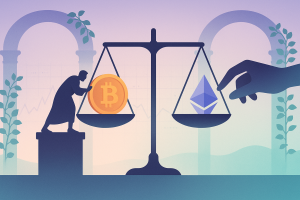
Ethereum co-founder Vitalik Buterin has laid out the most ambitious redesign of the network since it dropped proof-of-work in September 2022. Writing on July 4 after a week of researcher meetings in Berlin, Buterin detailed “Lean Ethereum,” a collection of upgrades he expects to take three to four years and touch nearly every core part of the protocol. The plan puts quantum resistance, privacy, and radically simpler code at the center, and it lands weeks after the Ethereum Foundation cut roughly 20% of its staff. For institutions that have started building on Ethereum, the message is blunt: the network’s next chapter is a multi-year delivery job, not a quick patch. It also arrives against a market that has been whipsawed by macro headlines in recent weeks.
A recursive STARK is a cryptographic proof that lets one computer verify an entire blockchain’s history without re-running every transaction, and it sits at the heart of the redesign.
- Buterin published the “Lean Ethereum” roadmap on July 4, 2026, calling it Ethereum’s third major overhaul after the Merge.
- The rebuild is expected to take three to four years and reworks consensus, cryptography, fees, and client software.
- Post-quantum signatures are targeted for 2029, with a new state design aimed at more than 10x lower fees for many tokens by 2030.
- The plan, co-developed with researcher Justin Drake, follows a roughly 20% staff cut at the Ethereum Foundation.
Published: July 6, 2026 09:00 UTC
What Lean Ethereum actually changes
Buterin frames the effort around three problems: simplification, privacy, and defense against quantum computers. The recursive STARK system would verify the chain rather than force every node to re-execute transactions, a shift meant to shrink the software and cut hardware demands on validators.
Quantum safety, Buterin wrote, has “shifted up a LOT in priority.” Post-quantum cryptography replaces the signature schemes that a powerful quantum computer could one day break, with full implementation targeted for 2029. Privacy gets a similar promotion. Rather than treating it as an application-layer add-on, Buterin said future upgrades will build privacy into the protocol itself, describing it as “a first-class goal” rather than an afterthought.
The roadmap also revisits the plumbing that businesses care about most: cost and speed. A redesigned state architecture targets more than 10x lower fees for many tokens by 2030, alongside a reworked consensus mechanism with faster finality and multidimensional gas pricing. The full technical set was developed with Ethereum Foundation researcher Justin Drake and draws on discussions from the Berlin sessions.
Why it matters for Ethereum’s Wall Street pitch
Ethereum has spent the past two years selling itself to banks and asset managers as the settlement layer for tokenized funds and stablecoins. Lean Ethereum turns that pitch into a delivery schedule. The upgrades promise the lower fees and stronger security institutions want, but they arrive on a three-to-four-year clock, and the network has to keep running smoothly the entire time.
The timing draws attention because the Ethereum Foundation recently trimmed about 54 roles, or roughly 20% of headcount, and moved to a tighter, endowment-style budget. A leaner organization is now committing to its heaviest engineering lift in years. Supporters read that as focus. Skeptics read it as a stretch.
The pushback
Not everyone buys the timeline. Analysts at BeInCrypto and other outlets flagged that a three-to-four-year overhaul touching consensus, cryptography, and client software carries real execution risk, and that similar Ethereum roadmaps have slipped before. Post-quantum cryptography in particular remains an active research area, and a 2029 target leaves little room for the standards themselves to shift.
Buterin’s counterargument is that quantum and privacy threats are not optional problems to defer. If a capable quantum computer arrives before Ethereum hardens its signatures, the cost of waiting would be far higher than the cost of a long rebuild now. Whether the network can execute without disrupting the institutions already relying on it is the question the next four years will answer.
Frequently asked questions
What is Lean Ethereum?
Lean Ethereum is Vitalik Buterin’s roadmap for a multi-year rebuild of the network, published July 4, 2026. It aims to simplify Ethereum’s code, add quantum-resistant cryptography, and make privacy a built-in feature, over a three-to-four-year timeline.
Why is quantum resistance a priority now?
A sufficiently powerful quantum computer could break the cryptographic signatures that secure blockchain transactions. Buterin wants post-quantum signatures in place by 2029 so Ethereum is protected before such machines become practical, rather than reacting after the fact.
How does this affect Ethereum fees?
The roadmap targets a new state architecture that could cut fees for many tokens by more than 10x by 2030. Lower, more predictable costs are central to Ethereum’s pitch to institutions building tokenized assets and payment systems.