
Austria’s Financial Market Authority fined Bitpanda GmbH €70,000 ($81,130) for breaching the European Union’s Markets in Crypto-Assets Regulation, and then published the decision. That second step is what makes the case matter. The FMA confirmed on Monday it was the first time the regulator had made a legally binding MiCA penalty decision public, turning a routine disclosure dispute into the reference point every licensed crypto firm in Europe will now be measured against. A crypto-asset white paper is the disclosure document MiCA requires an issuer to publish before offering a token to the public, covering the asset, the issuer, the technology and the risks.
Key takeaways
- Austria’s FMA fined Bitpanda GmbH €70,000 ($81,130) for MiCA breaches and published the ruling, a first for the regulator.
- The violations were procedural: a white paper filed less than 20 working days before publication, and marketing sent out before that white paper went live.
- One marketing communication omitted the mandatory statement that no regulator had reviewed or approved it, along with a phone number and email address.
- Bitpanda’s authorization is untouched and no customer funds were involved. The penalty is final after an expedited procedure.
Published: 17 August 2026, 16:15 UTC
What the FMA actually found
The regulator identified three failures, all tied to disclosure timing and form rather than to trading, custody or client money. Bitpanda submitted a crypto-asset white paper to the FMA less than the 20 working days ahead of publication that MiCA requires. It then circulated a marketing communication before that white paper had been published. A separate communication left out the statement that no competent authority had reviewed or approved the document and that the provider alone was responsible for its contents, and it omitted a telephone number and an email address.
The FMA did not name the token involved. Bitpanda told CoinDesk the white paper in question was submitted in early 2025 and that the findings “related exclusively to timing and formal specifications surrounding the publication of the whitepaper and an accompanying information document.” The company said it prepared the document in line with MiCA requirements, filed it with the FMA and coordinated the process with the authority throughout. After the regulator raised the points, Bitpanda corrected them and opted for what it called a “swift, consensual conclusion” to the proceedings.
The case closed through an expedited process under Austria’s Financial Market Authority Act. The penalty is final and cannot be appealed further.
Why an €81,000 fine carries weight across the EEA
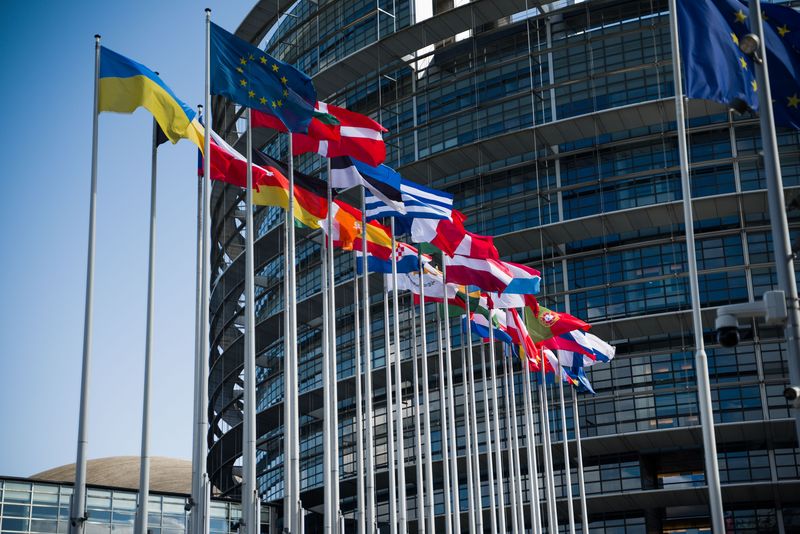
The number is trivial for a company that booked €371 million in adjusted revenue last year. The precedent is not. MiCA came fully into force across the bloc on 1 July 2026, and until Monday no national regulator had published a binding enforcement decision under it. Firms holding MiCA authorizations had supervisory guidance and licence conditions to work from, but no published case showing where a regulator would draw a line.
They have one now, and it lands on marketing and document timing rather than on solvency, custody or market abuse. Compliance teams at the several hundred authorized crypto-asset service providers operating across the European Economic Area will read that as a signal about where audits are likely to start.
The FMA pre-empted any argument that a first case deserves leniency. “The publication of sanctions is part of the legal system and serves to ensure transparency for market participants and investors,” the regulator wrote. “The fact that this is the first published MiCAR case does not in itself justify a special status for the company concerned or the violations found.”
Publication is the enforcement mechanism here, more than the euro amount. MiCA obliges national authorities to make sanction decisions public, which converts a modest administrative fine into a permanent, searchable record attached to the firm’s name. For a broker courting institutional partners, that record travels further than the invoice.
The timing problem for Bitpanda
Bitpanda is one of Europe’s largest retail crypto brokers, founded in Vienna in 2014. It closed 2025 with 7.4 million registered users, up 25% year over year. Germany’s BaFin granted the company a MiCA licence in January 2025, letting it passport services across the EEA, and the Austrian FMA separately authorized Bitpanda GmbH in April 2025. The firm has been pushing beyond retail, selling trading, custody and tokenization infrastructure to banks and fintechs, including through the Vision Chain network it launched for EU bank tokenization in March.
It is also preparing to go public. Bloomberg reported in January that Bitpanda was weighing an IPO on the Frankfurt Stock Exchange at a target valuation of €4 billion to €5 billion, with Goldman Sachs, Citigroup and Deutsche Bank hired to arrange the offering. A published regulatory finding, however procedural, becomes a disclosure item in that process. Underwriters and prospective investors will want to see the remediation, not just the correction.
What comes next
Watch for copycat publications from other national regulators. MiCA is administered by 27 member-state authorities under a common rulebook, and BaFin, France’s AMF and Ireland’s Central Bank all supervise larger clusters of authorized firms than Austria does. The FMA moving first gives the others a template and removes the awkwardness of being the one to open the account.
Expect white paper timelines and marketing sign-off to move up the compliance queue. The 20-working-day rule is a calendar problem, not a legal one, and it is the kind of requirement that gets compressed when a launch date slips. Firms already absorbing tighter rules elsewhere, from exchange sanctions screening to national retail caps, now have a published example of what that compression costs.
Frequently asked questions
What is a MiCA crypto-asset white paper?
It is a mandatory disclosure document that describes a token, its issuer, the underlying technology and the associated risks. Under MiCA, an issuer must file it with the national regulator at least 20 working days before publication and publish it before any marketing goes out.
Does the fine affect Bitpanda customers?
No. The FMA’s findings concerned white paper filing timelines and marketing disclosures. The decision does not involve customer funds, and Bitpanda’s authorizations from the Austrian FMA and Germany’s BaFin remain in place.
Why does a €70,000 fine matter?
Because it is the first legally binding MiCA penalty any regulator has published. MiCA requires authorities to make sanction decisions public, so the case creates a permanent, citable record and sets the reference point other EU regulators are likely to follow.